Epstein Files Under Judicial Review as Survivors Challenge Todd Blanche and the Money Trail Widens
The Epstein files are finally receiving something the Justice Department has worked very hard to avoid: independent scrutiny. A federal judge now has unredacted records, survivors are confronting senators over Todd Blanche, and researchers continue mapping the companies, trusts, properties, political donations, and professional relationships surrounding Jeffrey Epstein.
Today’s EpsteinWiki news update follows the legal fight over redactions, the pressure surrounding Blanche’s nomination, the launch of the Trump Epstein Bookmobile, and the financial structures that helped Epstein hide ownership, move money, and maintain elite access.
Key Takeaways
- A federal judge is privately examining unredacted Epstein records to determine whether Justice Department redactions were lawful.
- The Justice Department acknowledged that reviewers mistakenly redacted Jeffrey Epstein’s own email address.
- Legal analysis suggests that Justice Department reviewers used redaction categories that Congress did not include in the Epstein Files Transparency Act.
- Epstein survivors urged Senators Thom Tillis and John Cornyn to oppose Todd Blanche’s confirmation.
- Donald Trump suggested that he might temporarily withdraw Blanche’s nomination after Republican resistance delayed the vote.
- Campaign finance records reviewed by The Daily Beast reportedly connect nearly $90,000 in donations to Ashley Hinson and her political committees with donors named in Epstein records.
- Epstein used companies, trusts, property holding corporations, and intermediaries to conceal ownership and separate his name from valuable assets.
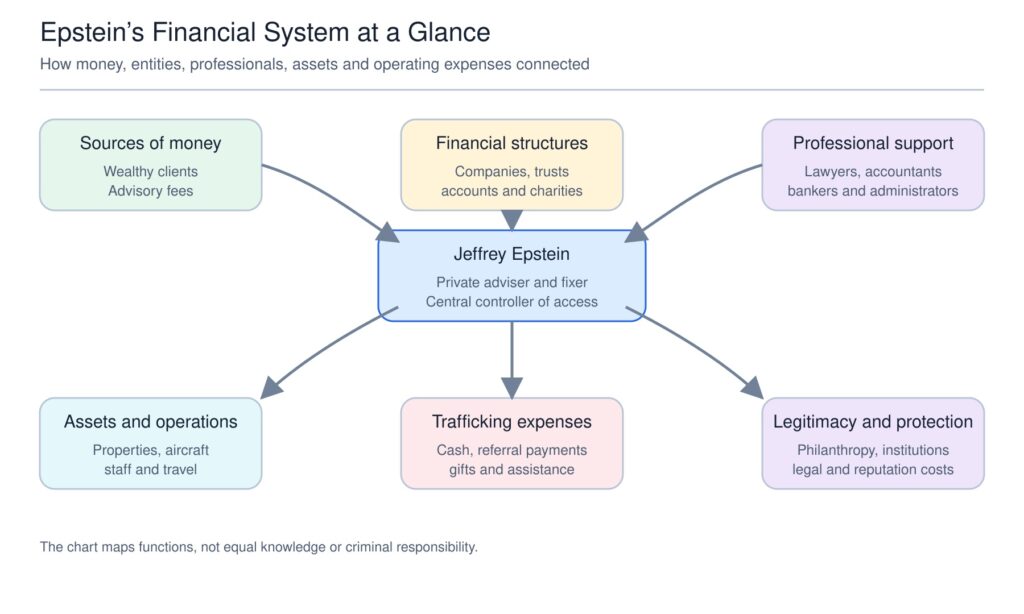
- Newly organized EpsteinWiki investigations show how Epstein’s financial system supported his properties, personnel, elite access, and trafficking operation.
- Archived emails document a familiar relationship between Epstein and former White House Counsel Kathy Ruemmler beginning shortly after she left government service.
- The Trump Epstein Bookmobile is taking searchable records and survivor advocacy directly to communities across the country.
In The News
Justice Department Redactions Face the Incompetence Defense
Cybersecurity researcher Jackie Singh examines how large institutional failures can be dismissed as mere incompetence even when their results resemble deliberate sabotage. The lesson applies neatly to the Epstein files, where repeated redaction errors protected some names while exposing survivors, creating damage that deserves an audit instead of another exhausted shrug.
Epstein Used a Hidden Company to Acquire Great St. James
The Miami Herald documented how Epstein apparently concealed his effort to purchase Great St. James behind an opaque company and the name of Dubai businessman Sultan Ahmed bin Sulayem. The seller reportedly refused to deal with Epstein, so Epstein’s solution appears to have been less “accept the answer” and more “hide the buyer.”
EpsteinWiki Maps the Companies, Trusts, and Financial Infrastructure
This EpsteinWiki investigation organizes the companies, trusts, foundations, property holding corporations, and financial vehicles connected to Epstein. The structure reveals how legal entities could conceal ownership, compartmentalize assets, pay expenses, receive money, and keep Epstein’s personal name conveniently distant from the machinery serving him.
Congress Authorized Five Redaction Categories and DOJ Added More
Attorney Eliza Orlins reports that Congress authorized five categories of withholding under the Epstein Files Transparency Act, while a Justice Department review protocol added protections for government employees, privileged material, and sealed records. Two of the ten disputed files before Judge Emmet Sullivan reportedly contain redactions justified through categories the department created for itself, because apparently writing extra exceptions in the margins now counts as statutory interpretation.
Julie K. Brown Offers to Give Ghislaine Maxwell a Real Interview
Investigative journalist Julie K. Brown uses a wonderfully sharp application letter to explain why CBS News should let her interview Ghislaine Maxwell. Brown contrasts serious investigative reporting with polished television auditions and reminds readers that Maxwell needs questions from someone who already knows the evidence, not another correspondent arriving with flattering lighting and selective amnesia.
Judge Receives Unredacted Epstein Records After Katie Phang’s Court Victory
The Justice Department delivered unredacted copies of ten disputed Epstein records to Judge Emmet Sullivan for private review after litigation brought by Katie Phang. DOJ also admitted that reviewers mistakenly redacted Epstein’s own email address, which is quite an achievement in a transparency process supposedly designed to release records about Jeffrey Epstein.
Epstein’s Companies Helped Carry Political Money Into New Mexico
Greg Conners traces political contributions attributed to Epstein and companies associated with his properties, including Maple Inc., Laurel Inc., Nautilus Inc., JEGE LLC, and other entities. The report connects Epstein related companies with contributions involving New Mexico political figures while raising questions about Zorro Ranch, its tax assessment, and the access political money may have purchased.
Ashley Hinson Faces Questions About Nearly $90,000 From Donors Named in Epstein Records
The Daily Beast reports that Representative Ashley Hinson and political committees connected to her accepted nearly $90,000 from wealthy donors whose names appear in Epstein records. The donors are not accused of participating in Epstein’s crimes, but the money deserves scrutiny because Hinson previously resisted efforts to force disclosure of the files, and coincidences become much less charming when campaign checks are attached.
Separating Epstein Evidence From the Internet’s Wildest Claims
Jeffrey Epstein Focus addresses the increasingly sensational claims circulating around the case and returns attention to what the available records can actually establish. Epstein’s documented history is disturbing enough without filling evidentiary gaps with confident speculation dressed in a trench coat and calling itself research.
Epstein Survivors Tell Thom Tillis to Vote Against Todd Blanche
Survivors Lara Blume McGee and Sharlene Rochard urged senators to reject Blanche’s confirmation as attorney general. They described their meeting with him as dismissive and said he had not meaningfully reviewed leads contained in the files, while survivors were exposed through careless disclosures and other names remained hidden.
The Trump Epstein Bookmobile Takes the Files Directly to the Public
The Trump Epstein Bookmobile is bringing searchable records, public education, and survivor advocacy directly to communities across the United States. It is a remarkably practical answer to institutional obstruction: if Washington will not bring the evidence to the public, the evidence is apparently getting wheels.
Trump Suggests He Could Withdraw Todd Blanche’s Nomination
The Senate Judiciary Committee delayed its vote on Blanche after Senators Thom Tillis and John Cornyn withheld their support. Trump responded by suggesting that he might temporarily withdraw Blanche’s nomination and submit it again after the senators leave office, which sounds less like confidence in a nominee and more like waiting for the witnesses to clear the room.
Emails Reveal Epstein’s Familiar Relationship With Kathy Ruemmler
Ellie Leonard compiles emails showing frequent and familiar communication between Epstein and former White House Counsel Kathy Ruemmler beginning in 2014. The exchanges cover career decisions, meetings, meals, travel, politics, prominent public figures, and personal details, documenting a relationship that appears considerably closer than an occasional professional introduction.
EpsteinWiki Reconstructs How the Business and Trafficking System Worked
This EpsteinWiki investigation connects Epstein’s recruitment practices, residences, employees, transportation, payments, companies, financial intermediaries, and elite relationships into one working system. It shows why the case cannot be understood as the isolated conduct of one man when an entire infrastructure helped locate victims, manage access, maintain properties, move money, and preserve secrecy.
In Closing
The Epstein story is not only about names appearing in files. It is about systems that protected power through corporations, confidential relationships, political access, professional services, institutional silence, and selective secrecy.
Judge Sullivan’s review may finally establish whether the Justice Department used lawful redactions or simply invented convenient reasons to conceal information. Meanwhile, survivors and independent researchers are doing what federal officials repeatedly promised to do: following the evidence, protecting victims, and refusing to confuse official authority with credibility.
Upcoming Events
Jul31
9:00 pm – 11:00 pm
Reading the Epstein Files with Ellie Leonard
Jul31
9:30 pm – 11:30 pm
EpsteinWiki: Loose Threads 3
Aug4
9:30 pm – 11:30 pm
EpsteinWiki: Loose Threads 4
Latest Wiki Pages
Recent Articles
- Jeffrey Epstein’s Companies, Trusts, and Financial Infrastructure
- How Jeffrey Epstein’s Business and Trafficking System Worked
- Sleuth Report: Jackie Singh Explains How Incompetence Becomes The Perfect Institutional Alibi
- Sleuth Report: Ellie Leonard Maps Kathy Ruemmler’s Five Years Of Emails With Jeffrey Epstein
- Sleuth Report: Lisa Tait Finds Epstein’s Secret Designer Baby Proposal
Call to Action
- Join our New Public Discord Investigation Server
- Donate to an Epsteinwiki Sleuth
- Sign These Petitions
- Support the Epstein Book Mobile
- Subscribe and Share The Butterfly Bureau Podcast